A Decisive Path to the Apocalypse
You can pick where you want to go or when you want to go—but often not both. Sailors pretty commonly use this saying.
The truth is, there are a lot of times when you get to pick neither.
Winds and waves kept REIMAGINED around Antigua for almost a month.
But when a small window finally opened, the destination was clear.
Montserrat.
It was (and still is) a British Overseas Territory—similar in status to St Helena.
Just 27 nm from the west coast of Antigua sits Montserrat, an island I was only vaguely familiar with—something about a volcanic event of some kind.
So I booked a tour to find out more.
Pop culture went through a phase.
End of the world scenarios.
A disease wipes everyone out except a few.
An asteroid hits Earth and destroys most of humanity.
Even Apple TV has its many versions of apocalypse stories.
As humans, we seem to love this type of content.
But Montserrat isn’t fiction.
It’s a real-life ground zero.
Let’s go back to around 1995. The population of Montserrat was about 13,000 people. Most lived in Plymouth, a town on the southern part of the island.
July 18, 1995, was a life-changing Tuesday for most people on Montserrat.
The Soufrière Hills volcano awoke after 400 years of slumber and erupted. And it didn’t just erupt once. Through the late 90s and into the early 2000s, it erupted again and again.
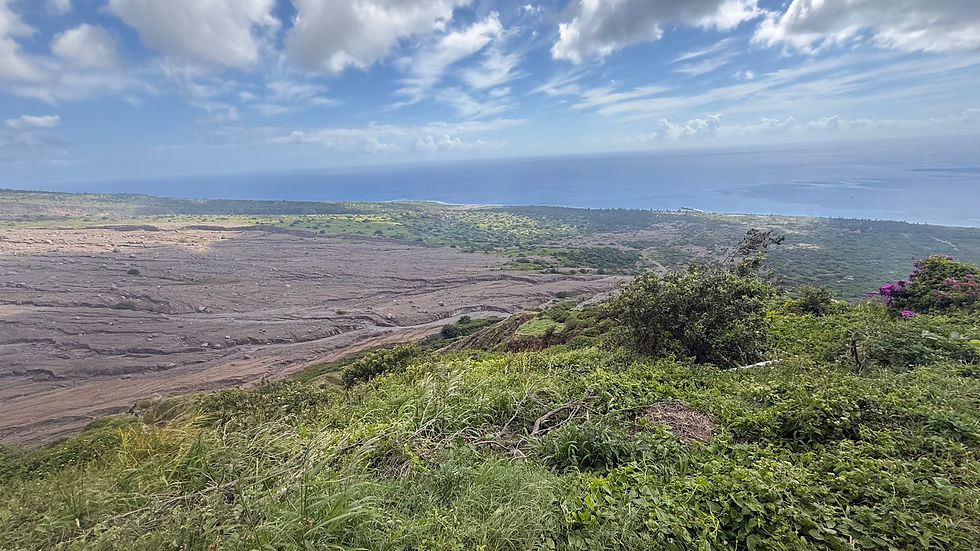
These events forced the creation of an exclusion zone covering roughly 60% of the southern part of the island. The capital of Plymouth was completely abandoned. Nearly 9,000 people left, bringing the population down to around 4,000.
What makes Montserrat different is how it was destroyed.
This wasn’t slow-moving lava like you see in Hawaii. There are no glowing red rivers.
Instead, the volcano produced pyroclastic flows—superheated gas, ash, and rock moving at incredible speed—followed by mudflows that buried everything in their path.
Entire towns were swallowed.
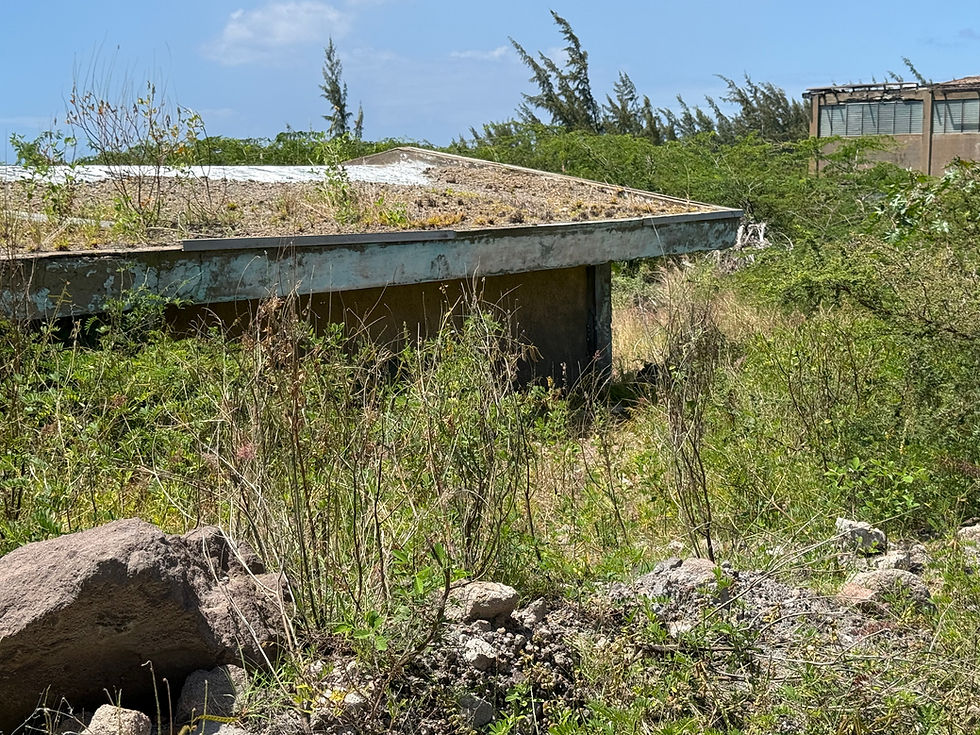
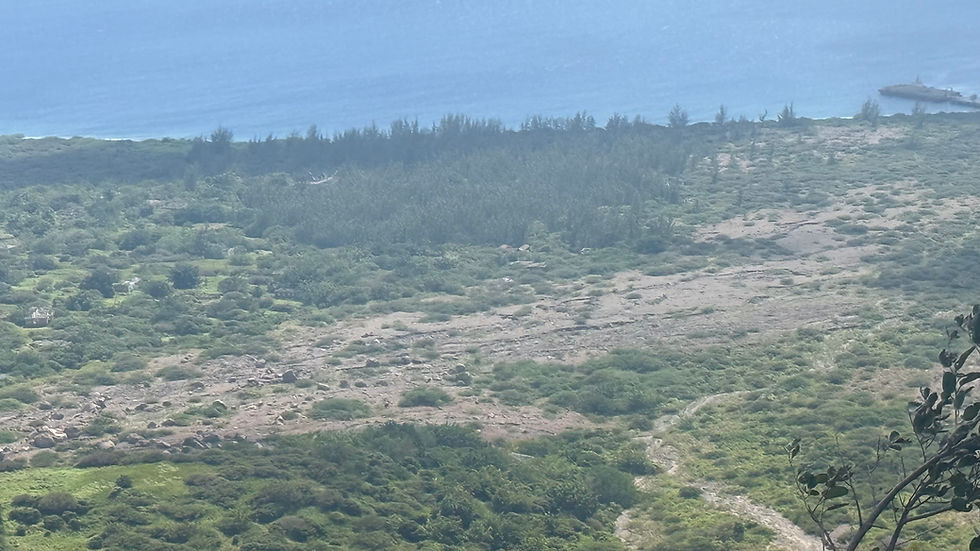
Today, much of the exclusion zone is either buried or slowly being reclaimed by nature, creating an almost surreal, apocalyptic landscape.
With a tour guide, you can now enter parts of the zone.
You can walk through abandoned neighbourhoods.
Look through the window of a house and realize you’re actually looking into what used to be the third floor—because the first two are buried.
See what it looks like when civilization is simply… left behind.
No movie needed.
To date, it’s the most interesting and surreal thing I’ve seen while sailing.
You can pick where you want to go, or when you want to go—but rarely both.
On July 18, 1995, the people of Montserrat didn’t get to pick either.
No warning that mattered. No real choice. Just a moment where everything changed, and a future that looked nothing like the one they had planned.
In its heyday, Montserrat wasn’t just a quiet Caribbean island—it was a cultural and music hub. There was a world-class recording studio up in the hills—AIR Studios—founded by George Martin, the same guy behind The Beatles. Big names like Elton John, The Rolling Stones, Dire Straits, and Eric Clapton all recorded there.
For a time, this tiny island was punching way above its weight on the global stage.
And then, almost overnight, everything changed.
And yet, the island didn’t disappear.
Today, the people who stayed—and the ones who came back—decided on their own. To rebuild. To continue. To live alongside something that had already taken so much.
They may no longer have the same global footprint, but what they’ve rebuilt is different. Something quieter. Something real.
There’s something powerful in that.
Because while nature decided for them that day, what came after—that part was theirs.
A place I would recommend visiting. Lots of photos and a video. Check them out.